Basic HTML Version


WORLD FOOTWEAR
JANUARY/FEBRUARY 2012
Market size
What keeps people buying shoes is an interesting
question. Seasoned industry observer Peter Mangione
believes that the consumer has no interest whatsoever
in the sourcing, supply chain, manufacturing and (in
many cases) even the material challenges shoe
companies face. In the case of China, so central to the
APICCAPS calculations and to the global industry, there
is what Mr Mangione calls “an apparent consumption”
(reinforcing the difficulty of giving exact numbers when
official figures are hard to come by) of 3.6 billion pairs a
year. This makes China the biggest market in the world
for consumption as well as for manufacture, and
consumption can only go up sharply, he says. Europe is
next, with a market size of 2.84 billion pairs a year, and
the US in third place with its 2.3 billion pairs. The latter
two economies face well-publicised challenges at the
moment, while the economy in China is still booming.
“There is no question,” he continues. “In the mid-1990s,
footwear consumption in China rocketed and now we
have brands such as Belle, Aokang, Kangnai, Li Ning,
Daphne and others who are all expanding at an
amazing rate. Overheads [for retailers] are high because
landlords are greedy, but if the per capita rate of
consumption reaches four pairs per year the domestic
market would be 6 billion pairs.”
At the same time, many Chinese footwear factories
still make shoes for export markets and he
acknowledges the doubts that remain in the western
world over the fairness of the competition. Peter
Mangione is a frequent visitor to China and was
personally instrumental in helping the China Leather
Industry Association get off the ground 20 years ago.
His view is that any company making shoes for US or
European customers in China at the moment will be
subject to strict audits and will be meeting all its
obligations with regard to social security payments and
workers’ rights.
Labour is certainly becoming increasingly expensive
there. A survey the industry consultant mentions of
“dozens and dozens of factories” puts workers on an
average wage of $1.50 an hour. “It’s the highest-cost
major footwear manufacturer in Asia,” he says.
“Vietnam, Thailand, Indonesia and Bangladesh are all
cheaper and China can only go up.” However, he
confirms that China will continue to be a big player in
shoe manufacturing because it has 800 million people
of working age.
Protectionism or trade defence actions continue. Mr
Mangione claims that the European Union placed
restrictions of one kind or another on imports of
footwear from China for 20 years until the most recent
anti-dumping measures ended on March 31, 2011. But
the EU is far from the only market to take such steps, as
the current situations in Mexico, Argentina, Peru and
Brazil show clearly. “And that’s to say nothing of
Japan,” Mr Mangione continues, “and Japan won’t
change. Good luck if you are trying to sell street leather
shoes in Japan.”
Free trade, fair trade
Across the board, the president of European footwear
industry association CEC, Vito Artioli, says that attempts
to make global trade in shoes fairer, including the work
carried out by the World Trade Organization and the
Doha Round of trade talks, have not been effective.
Instead, he suggests, footwear industry organisations
and the footwear companies that make up their
membership should push for bilateral agreements to
make trade free and fair.
“A bilateral agreement between the European Union
and the Mercosur countries in South America would be
a good example,” he said. “I would ask the political
authorities in the EU and in Mercosur to sign the
agreement they have been attempting to negotiate for
a long time.” First discussions of a free trade agreement
between Mercosur and the European Union took place
in 1999 but were suspended in October 2004. What the
two trading groups have called “a process of informal
contacts to take stock of the situation” occurred in 2009
12
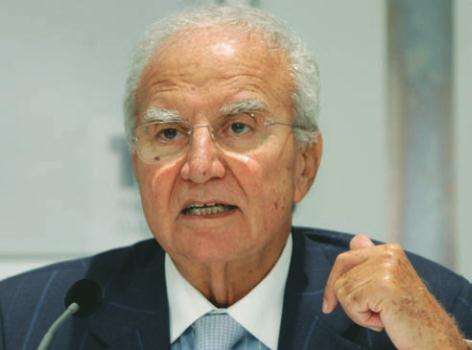
Director general of ANCI, Fabio Aromatici, says leather will
continue to be the material most synonymous with
Made in Italy.
CREDIT: MICAM
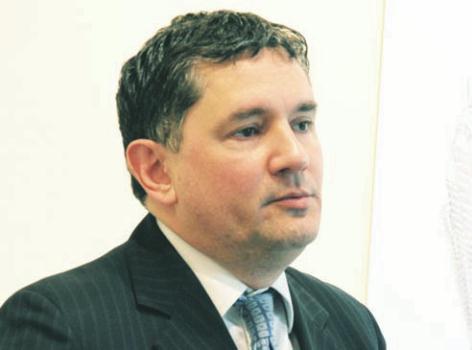
Vito Artioli, president of European footwear industry
association CEC, says bilateral agreements between countries
and trading blocs will help footwear manufacturers in the
absence of global agreements on fairer and freer trade.
CREDIT: GDS/CONSTANZE TILLMANN