Basic HTML Version



PATRICK COX IS BACK WITH A BANG
“What made me come back was simply that Geox asked
me,” he said. “They came to London and asked if I knew
anyone who could help them make more of an impact in the
English market, and I said ‘me’. Both sides had a great
feeling about it and within only five days or so we reached
an agreement.”
Comfort considerations
He describes the partnership as a good match as both he
and Geox are known for comfort and says this has come out
in the collection, which he describes as “very sneaker- and
loafer-oriented, but also very London”. The consumer he
had in mind when coming up with the designs is someone
who has worn a lot of sneakers and may now be looking for
something in a similar vein in terms of performance and
comfort, but with a little more design.
During his break from the industry, Patrick Cox took many
holidays and, while travelling, wore a lot of “free-time,
casual footwear” himself. “There’s nothing really wrong
with those shoes,” he says now, “except they’ve maybe got
too many logos on them. This collection is much more
designed, more grown up. It’s casual in spirit and reflects
London’s cool urban vibe, but you don’t have to be in hip-
hop clothing or an adidas track-suit to wear them.”
Asked if he found it restrictive to combine his ideas for
upper materials and the overall look he was attempting to
achieve with Geox’s soling technology, he answers: “Not at
all. The Geox technology is so hidden, it didn’t interfere
with anything. I had to insist about the python skin
because I have a reputation for using exotic leathers. All
Geox said was that it would take that particular shoe above
the price-point they had in mind for this collection [
€
100-
150 at retail] and I just said that it’s all right to add a
special shoe to a collection. But they sell 25 million pairs a
year and know what tanners they like to work with and
which leathers and finishes work. We had no difficulty
reaching agreement.”
Lost in translation
Geox is proud of its part in promoting Italy, Italian
technology and the country’s footwear industry. Patrick Cox
needed no convincing of the quality of craftsmanship in the
industry in Italy or of the leather and other materials Italian
footwear manufacturers have at their disposal. When he
first set up his own label, the manufacture of his shoes took
place in the UK but, within two years, he had moved
production to Italy, working with high-quality craftsmen
and women in some of the most famous footwear regions,
Veneto, Tuscany and Le Marche.
Nevertheless, there is a big emphasis from both sides of
the partnership on the connection between the new
collection and the London fashion scene. So does this
represent a departure for Geox? “I think so,” Mr Cox says,
“and I think it’s a smart move. Geox has six stores in the UK
[five in greater London and one in Belfast; a seventh is
about to open, again in London] and a very small
percentage of market-share here. I think there are some
Italian shoes that just don’t translate. I don’t know why this
happens, but I’d put [Tod’s brand] Hogan in that category
and possibly Tod’s itself. In just the same way, there are
aspects of British fashion that don’t translate to Italy either.”
The shoe designer believes his own tradition of Italian
craftsmanship speaks for itself, as does his understanding of
London fashion and design, and therefore he is best placed
to bring the two worlds together, which Geox is attempting
to do now. But Patrick Cox is sure it will be a good move for
him too. “It’s me coming back with a bang, not with a
whimper,” he says. “It’s something global and not just me
making a small collection of shoes and trying to get that off
the ground.”
39
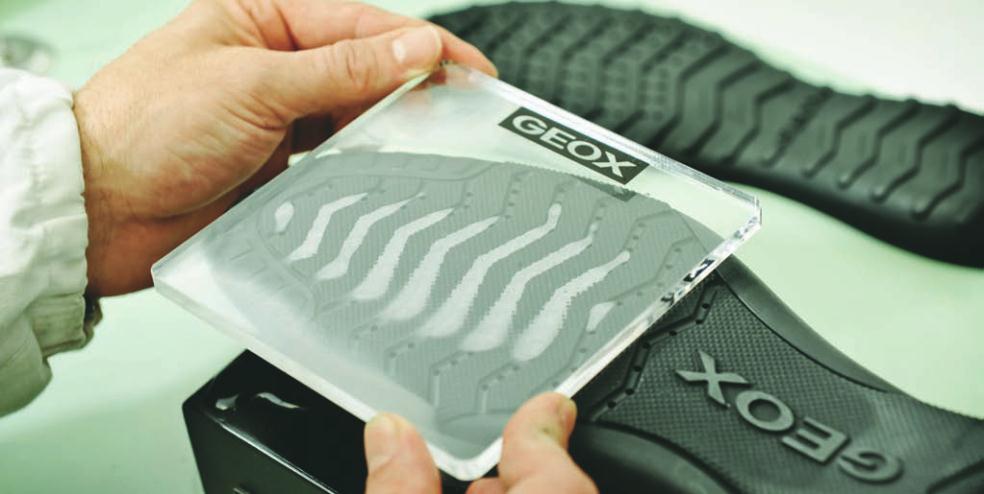
Combining Geox’s patented soling technology with the upper
materials, including exotic leathers, that he wanted to use did
not present any problems for Patrick Cox.