This is a SEO version of wfjulaug2011. Click here to view full version
« Previous Page Table of Contents Next Page »COLUMBIA SETS ITS SIGHTS ON GORE
13
penetration beyond the outermost layer may also help reduce the incidence of mould, mildew and bacteria that often develop when internal fabric layers become wet, it adds.
Nextec Srl, the Italian company originally behind OutDry, fought hard to gain and keep patent protection for the technology. It won a legal victory over Gore in October 2008. Gore had presented a complaint to the European Patent Office’s Board of Opposition challenging OutDry’s right to carry patent EP1139805, which covers the whole of the laminating process it uses to apply membrane technology to finished footwear, gloves or apparel. The Munich-based patent authority decided that Gore’s opposition was unfounded and that the patent should stay in place.
Brothers Matteo and Luca Morlacchi, founders of Nextec and still running OutDry as part of Columbia Sportswear, were more than pleased by the Munich decision: they felt they had struck a blow for smaller companies everywhere. “This patent is wide-reaching,” Matteo Morlacchi said at the time. “It covers any application in which you can take a piece of leather and bond a membrane to it. That’s why Gore fought it so hard, investing heavily in research, consultancy and lawyers. But the problem for them is that, as a result of this whole, long process [four years], the patent is stronger than it would have been if they had just left us alone.”
What he meant was that the OutDry patent had been subjected to serious scrutiny by the patent authorities and their expert advisers, and had come through intact, making future challenges to it difficult to put together. In turn, this gave OutDry and user companies such as mountaineering footwear brand Scarpa confidence that their investment in the breathable membrane technology (OutDry to make it, Scarpa to put it into its shoes) would prove worthwhile because the patent court decision would make it difficult for low-cost copies to make an equal impression on the market.
Gentle digs

The acquisition of OutDry by Columbia Sportswear happened a year ago, coinciding with the 2010 Outdoor Retailer Summer Market exhibition in Salt Lake City, where the companies announced they had reached an agreement. The transaction, a cash purchase for an undisclosed sum, closed a month later, at the start of September 2010. It didn’t mention Gore

by name, but right at the outset, the company leadership at Columbia made it clear that it viewed its acquisition of OutDry as a way to challenge rival providers of membrane technology.
“We view OutDry’s proprietary construction methods, under development since 1998, as the gold standard for producing waterproof, breathable footwear and gloves that outperform products still relying on the 25-year-old method of internal booties and bladders,” said chief executive, Tim Boyle. “We intend to deploy OutDry across our portfolio of outdoor brands, including Columbia, Mountain Hardwear, Sorel and Montrail, as well as to market OutDry to select leading brands within and beyond the outdoor industry.”
Specifically on the subject of shoes, the brand’s global vice-president for footwear, Mark Nenow, added: “OutDry finally delivers the waterproof breathable innovation that outdoor consumers have been asking for. This is ground-breaking waterproof breathable footwear innovation for the mountaineer, the hiker, the multisport athlete, the trail-running enthusiast, the road-runner and any consumer that wants waterproof footwear without having to sacrifice performance, fit, lightness in weight and comfort.”
These asides are mere gentle digs at Gore and its dominance compared to what has followed in 2011. Gore is a privately held company, so its reaction to investigations by the competition authority has been muted, in public at least. A glance behind the scenes reveals that Gore has strenuously resisted the FTC investigation, arguing that what the commission is asking for, documents relating to the way its fabrics division has worked with supply chain partners around the world during the past decade, is “unduly
burdensome”. Gore has said that to meet the request in full, it may have to find and present tens of millions of documents, including archived emails from the accounts of people who have long left the company. The FTC has turned down the company’s attempts to quash the process and the case continues. If the European Commission takes on board Columbia’s complaint and grants the request for a similar investigation there, Gore will face a fight on two fronts.
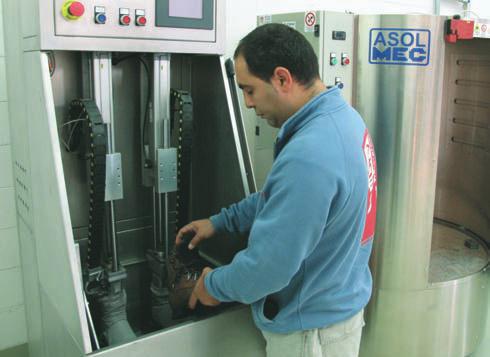
OutDry’s method is to bond a waterproof, breathable membrane directly to the outermost layer of a shoe.
CREDIT: COLUMBIA SPORTSWEAR
This is a SEO version of wfjulaug2011. Click here to view full version
« Previous Page Table of Contents Next Page »