Basic HTML Version


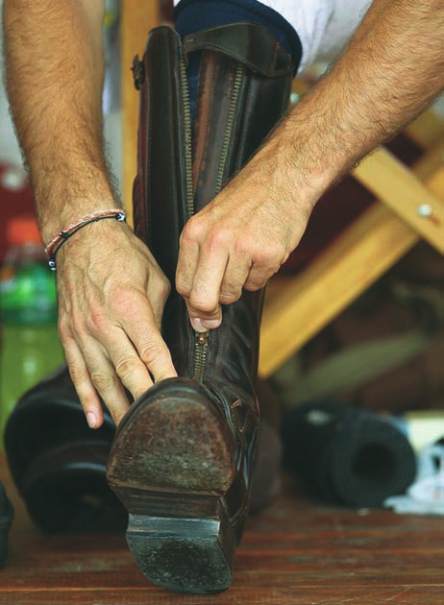
Heguy are often handmade with high quality materials, from
high-end bovine leather to hand-waxed thread for durability
and long, especially robust zips.
Perhaps the best known international brand for polo
equipment in general is Buenos Aires-based La Martina. Its
boots come in buffalo as well as cow leather, tailor-made with
prices starting at $600 per pair. La Martina claims that the
vegetable-tanned leather it uses on the soles of its polo boots
undergoes a seven-month tanning process to achieve the right
level of durability.
Tango in Tokyo
Wealthy people are also responsible for bringing the tango
to Japan, although originally this was a dance of the working-
class areas around the ports of Buenos Aires and Montevideo.
As a result of a Japanese aristocrat, Tsunayoshi Megata,
developing a lasting passion for the dance while visiting Paris
in the 1920s and taking it back home, Japan has a long history
of tango academies and orchestras. No less a figure than
famous Argentinean tango composer Edmundo Rivero
dedicated two tunes to Mr Megata and travelled to Japan on
tour in the 1960s. In recent years, Japanese dancers Hiroshi
and Kyoko Yamao and Chizuko Kuwamoto (with a partner
from Argentina) have won world tango championships, and in
so doing have helped maintain the popularity of the tango in
their home country.
Just as the tango is an elegant and sensual dance, tango
shoes for women tend to be spectacularly sexy, high in the
heel (7.5 or 8.5 centimetres is typical) and open at the vamp,
with straps across the ankle to secure them. Alicia Muñiz loved
tango and the milongas (dance halls devoted to tango) of
Buenos Aires so much, she founded a footwear brand,
Comme Il Faut, dedicated to hand-made tango shoes in 2003.
She says the secrets of a good tango shoe are the design, the
quality of the materials and the technical know-how to make
the shoes (especially the heels) strong, safe and comfortable
enough to dance in. Other prominent brands include Flabella,
Bandolera, Raquel, Soy Porteño and Delié. For men, classic
spats in black and white are very popular. The tango delights
and entrances audiences and participants all over the world
now and it’s only natural that Argentina’s footwear brands
should seek to gain popularity for their tango shoes in the
wake of this.
CIC organised special commercial missions to Japan and
China in the course of 2011, Mr Moschetto confirms, and
“worked arduously” to secure openings in those markets for
polo and tango footwear. He explains: “The success we have
had is down to the fact that the Argentinean footwear industry
has always counted on leather as its main raw material. This is
a competitive advantage and it has allowed us to earn prestige
at a world level. It’s all thanks to the capacity and experience
of our tanneries and our skilled workforce.”
12
WORLD FOOTWEAR | MARCH/APRIL 2012
Xia Yang, a former architect based in Beijing
who turned his hand to property
development and has made large amounts of
money in the Chinese economic boom,
founded the Sunny Time polo club in China’s
national capital in 2004. He told the
Daily
Telegraph
in a 2008 interview that he
believed polo was one way for the newly
wealthy there to gentrify themselves a little.
He said: “In the West, polo is said to be an
aristocrats’ sport. We don’t have aristocrats in
China, but we do have a lot of people who
have become very rich very quickly. I want to
encourage them to behave like gentlemen,
and playing polo is part of that.”
Soon after this, China set up its own national
polo association, under the auspices of the
Chinese Equestrian Association and the
number of clubs grew. In February 2012, 12
top international te ams gathered in the
municipality of Tianjin for the first Snow Polo
World Cup to be hosted in Asia.
POLO PROVES POPULAR IN CHINA
Polo boots are another specialist luxury product that the
Argentinean footwear industry believes can make an
impact in export markets, especially in emerging
economies such as China’s.
PHOTO CREDIT: LA MARTINA