Basic HTML Version


MANUFACTURING & MATERIALS INNOVATION
WF
20
T
he first man-made plastic was invented in Britain by
Alexander Parkes in 1861. Called Parkesine, it was a
cellulose derivative that could be heated, moulded
and, when cool, would retain that shape. It was not however
commercially practicable. In 1868, John Wesley Hyatt in
America developed Celluloid which was; with the help of his
brother he then went on to patent the first injection moulding
machine in 1872. For the next 70 years, the process changed
very little and its use was restricted to manufacturing simple
products such as buttons and hair combs.
The breakthrough came in 1946 when another
American, James Watson Hendry, built the first screw
injection machine. It now became possible to control the
speed of injection more precisely which, in turn, allowed
better quality products to be made. It also allowed material
to be mixed prior to injection so that colouring agents or
recycled plastic could be added to virgin material. Injection
moulding is therefore clearly not a new technology. It is,
however, one that has had an enormous impact on industry
in general and the production of footwear with non-leather
soles in particular.
While some producers of injection moulding machines
for footwear specialise in a particular material or group of
materials, others try to cover a broader field. Very few cater
for all the synthetic soling compounds used in the footwear
industry and, of these, Main Group Technologies from Italy is
at the forefront. The brand has been in existence for 80 years
and during that time has accumulated an immense wealth of
practical experience in designing and building injection
moulding machines. It has recently taken another step
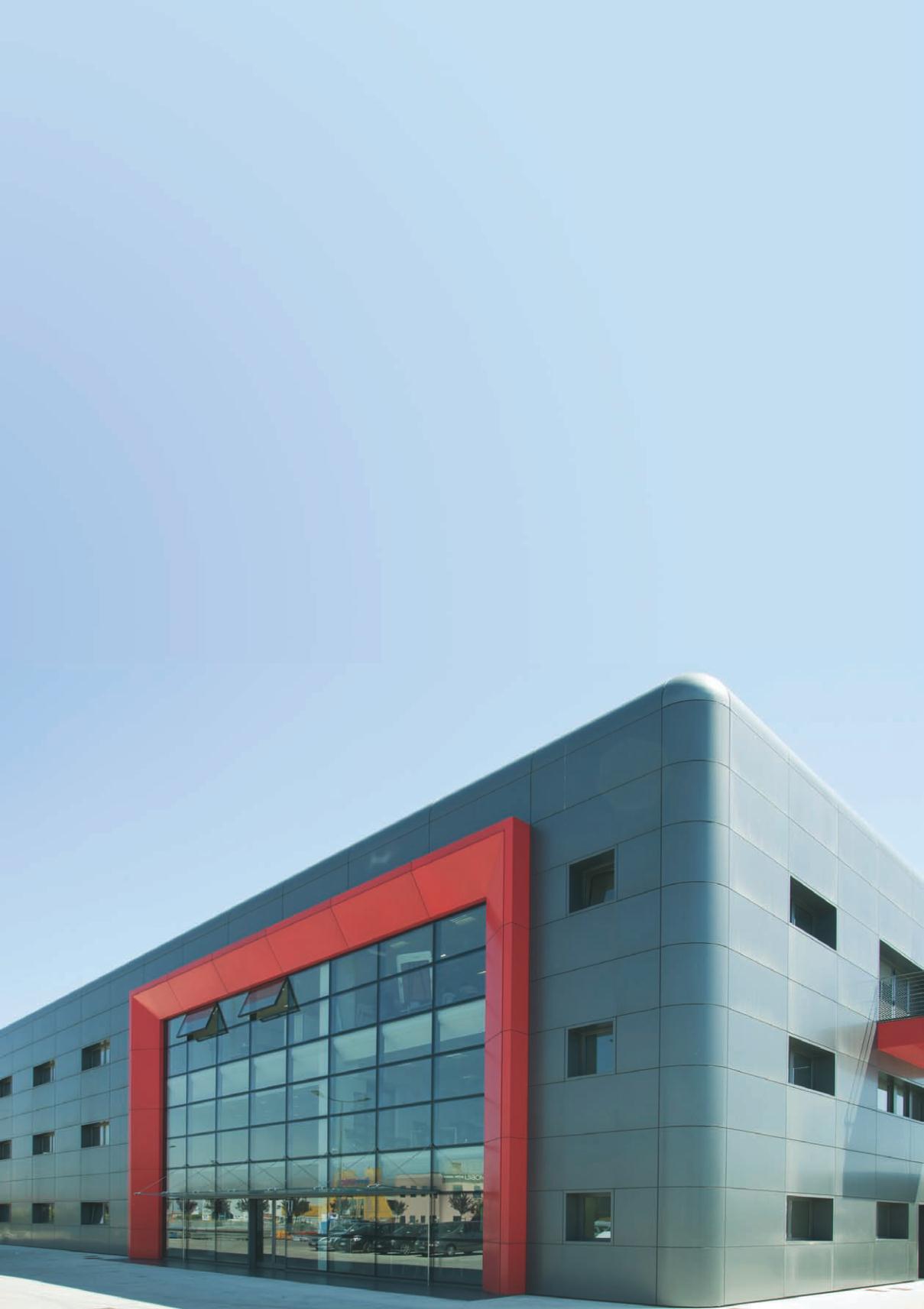
forward with new headquarters with all the facilities needed
to design, manufacture and warehouse its extensive range
of machines in one place.
The scope of this range is quite extraordinary as it
comprises no less than 14 designs capable of injecting
rubber, EVA, PU and the entire range of thermoplastics, as
well as combinations of different materials. The spread of
technology needed to do this is made possible only by the
company’s many years of experience and innovation. It also
means the company is able to take advantage of any new
trend that may appear in the soling market. It is a perfect
example of strength in depth. The latest offerings shown at
the most recent SIMAC are a testament to this.
BUILDING ON EXPERIENCE
ALL IMAGES:
MAIN GROUP TECHNOLOGIES