This is a SEO version of wfjulaug2011. Click here to view full version
« Previous Page Table of Contents Next Page »WORLD FOOTWEAR JULY/AUGUST 2011
30
The modular construction of the shoes serves mainly to highlight to the consumer the fact that they are wearing something that has been crafted, and should therefore be looked after. “Today more and more customers like to know where their products are from and how they are made,” says Ms Rieker. “By integrating the user in the production of their shoe, I wanted to make the process more transparent. The user has an experience that hopefully raises awareness for the difficulty of footwear production.”
Ms Rieker says that another reason for the self-assembly shoe is to promote regional economies. In an increasingly global world, it is often the case that a pair of shoes has travelled thousands of miles around the world during the production process before arriving at its destination. “With the integration of the local shoemakers in the production process, the Creo Shoe Concept cultivates regional products and tradition,” says Ms Rieker. “The Creo shoe supports small businesses and local craftsmen to establish a sustainable and regional economic system. The interaction between the user and the local craftsman lets the user learn about the shoemaking process. Moreover, the user
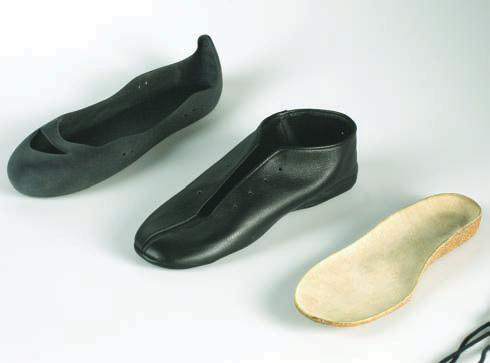
The components of the Creo shoe are assembled, with the help of a local shoemaker, to make the finished product.
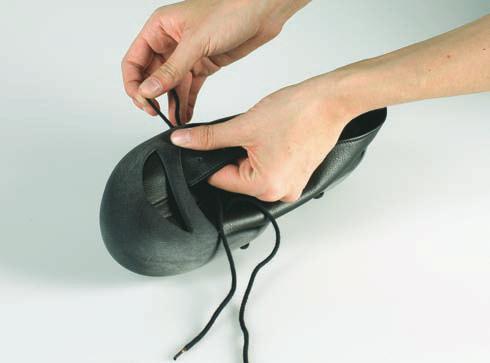
The customer gives the inner shoe components and instructions to a local craftsman, then personally finishing the assembly.
W ORLDWIDE L EADER IN Q UALITY A SSURANCE ,
C ONSULTANCY AND T RAINING FOR F OOTWEAR AND L EATHER G OODS

This is a SEO version of wfjulaug2011. Click here to view full version
« Previous Page Table of Contents Next Page »