Basic HTML Version


MANUFACTURING & MATERIALS INNOVATION
T
he European Union’s strict
environmental controls, high
labour costs and increasingly
restrictive employment laws
have prompted many manufacturing
companies in the footwear sector to
shift their production to Asia. While
this has been seen as a quick and easy
fix, it has also led to a totally different
set of problems involving lengthy
supply chains, controlling quality at a
distance and, of late, increasing costs
due to rapidly rising labour rates in
much of the Far East.
As with so many other aspects of
globalisation that, ten years ago seemed
so attractive to Western economies, the
downsides were not immediately
apparent. The global financial crisis of
2008 changed all that and, now, those
same economies—especially in the
Eurozone—are seeing the unwanted
effects all too clearly in terms of
cripplingly adverse trade balances, a
loss of manufacturing that has hit
government tax revenues and high
levels of unemployment that may yet
lead to social unrest.
In some industries, manufacturing is
beginning to return to Europe helped by
advanced manufacturing technologies
that do not require a large labour force.
While we are unlikely to see the
resurgence of a large footwear industry
as in the past, there will be a place for
companies able and prepared to
embrace a similar approach. Indeed,
there are companies that decided not to
move production abroad and have
nevertheless managed to prosper. One
of these is outsole and footbed producer
ALSA GmbH, located at Steinau and
Görlitz in the heart of rural Germany. It
has also managed to do so in the most
environmentally way possible and
provides a possible guide for the future.
HEAT RECOVERY
CO
2
is, as we are constantly
reminded, a major factor in global
warming and the production of EVA
unavoidably creates it. So, how to
contain it? One way is to employ heat
recovery in the moulding facilities and
drying chambers. Warm used air passes
through heat exchangers and the
recovered heat used to pre-heat
incoming air. Heat balance in the actual
production area can also be better
balanced by a heat recovery ventilation
system. ALSA uses four air supply and
exhaust systems each containing a
rotating air-to-air heat exchanger
working on the principle of thermal
conduction so that warm air from one
is mixed with cold from the other to
produce warm fresh air with the
minimum use of energy.
An overall reduction in energy
consumption by industry in general
would not only be of economic
benefit, but also be significant in
ecological terms. Waste heat is
generated in many production
processes that by intelligently linking
them with new ventilation and climate
technology would reduce CO
2
and
other harmful emissions.
22
WORLD FOOTWEAR | MARCH/APRIL 2012
Manufacturing in Europe
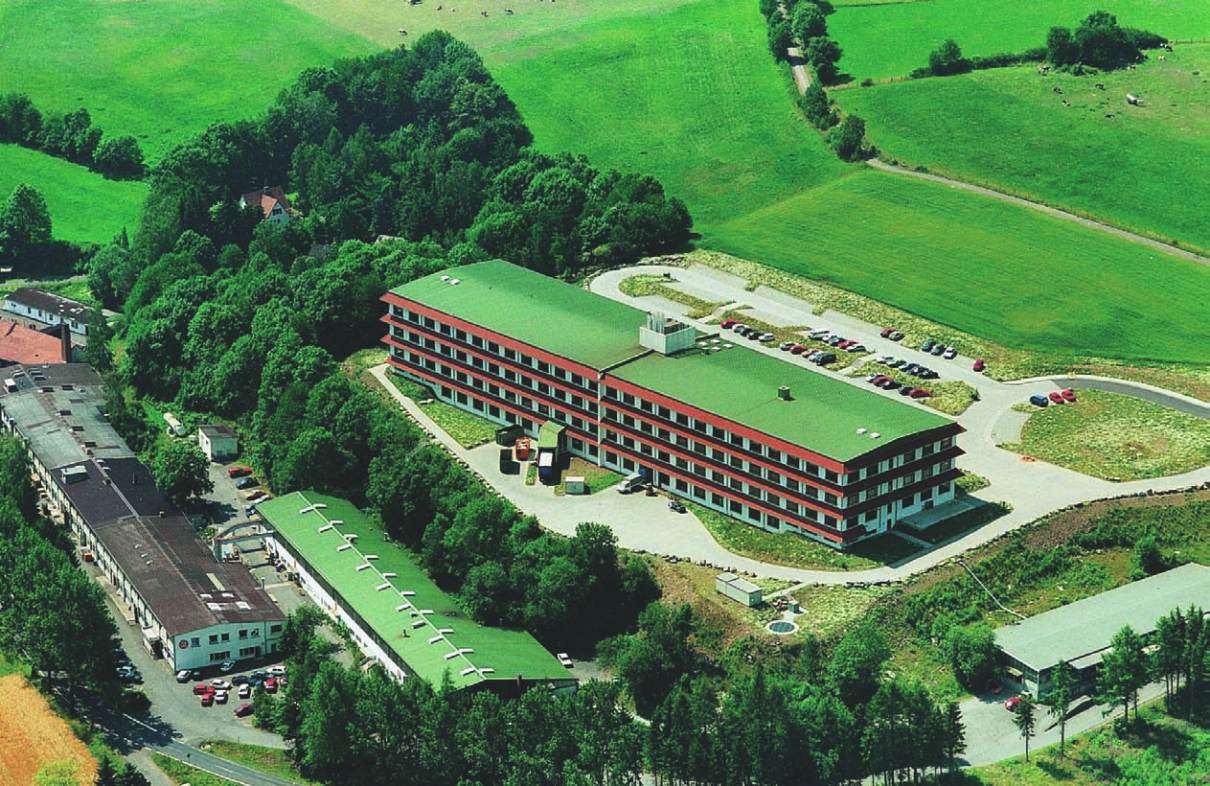
ALSA factory at Steinau.
PHOTO CREDIT: ALSA