MANUFACTURING & MATERIALS INNOVATION
WF
20
I
n numerous shoe surveys conducted over the years,
comfort has always topped the list of desirable features
for consumers. Comfort, however, is an extremely
complex concept to attain as it relies on a mix of tactile,
thermal and biomechanical features that have been built into
the shoe in order to provide support, shock absorbency and
thermal comfort, all packaged in an unrestricted natural
shape. The degree of comfort experienced will therefore
depend on the shoemaker finding the right mix of these
properties for the type of shoe involved.
THE NATURAL STATE
Recent years have seen the growth of ‘natural’ shoe
brands marketing their products as contributing to the overall
wellbeing of the body. But, what exactly do we mean by
natural when the wearing of footwear is essentially
‘unnatural’ for the human body? The original reason we took
to wearing shoes was simply to obtain a degree of warmth
and protection.
In our natural barefoot state, the ideal distribution of
weight for the human body when standing is 50% on the ball
of the forefoot and 50% on the heel; wearing a shoe with a heel
changes this. Depending on the height involved, the split can
vary from approximately 40–60% distal on a sports shoe to
20–80% forward on the forefoot for a ladies high heel shoe. The
latter is therefore clearly not in any sense a natural condition.
However, bearing in mind that propulsion starts with the
midfoot, propels the body forward onto the ball of the foot and
finally to toe off, it is in fact an advantage to shift the weight
forward into the ‘ready’ position in many athletic activities.
For example, tennis players always prefer to receive serve on
the balls of their feet rather than back on the heels.
BALANCE
Whatever their construction, styling or function, all
shoes can be categorised into three Sagittal planes:
• Plantarflexed where weight is shifted forward on to the
ball of the foot (shoes with heels or wedges)
• Neutral where the foot is essentially kept on a level plane
• Dorsiflexed where a negative or minus heel concept
transfers more weight onto the rear of the shoe
While most of the footwear produced today falls into the
first category, millions of people around the world continue
to wear neutral flat soled sandals or flip-flops. Claims that
the latter improve the wearer’s posture could well be valid as
witnessed by the graceful movement of many Asian women.
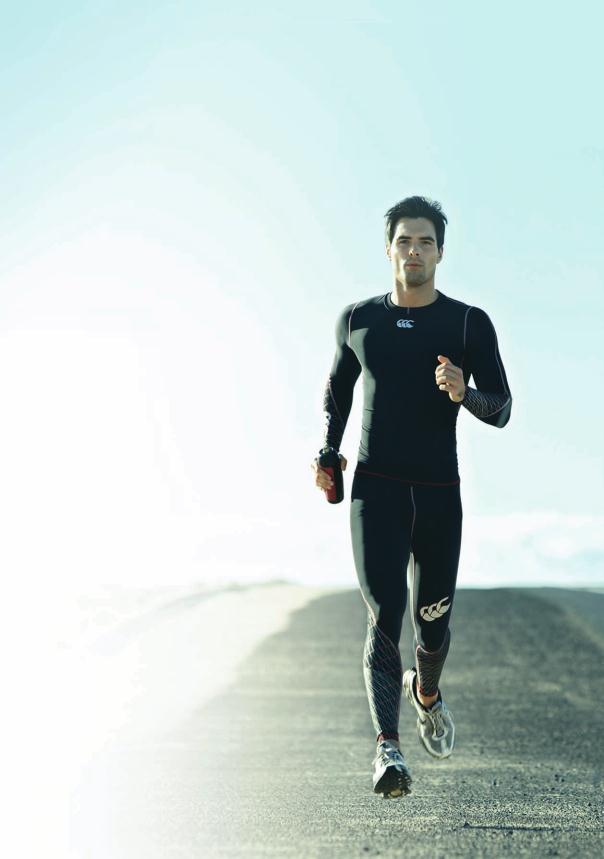
CREDIT: CANTERBURY
Footwear Fundamentals
DEFINING FOOT COMFORT