
A PHILOSOPHY FOR SUCCESS
of products such as bicycles was banned. The import of
spare parts for cars and trucks nevertheless continued, so he
struck out on his own as an importer of these items from
Germany and Italy. Inevitably, India also began to produce
these as well as many other products until by the mid 60s
virtually all imports were either banned or severely
restricted.
In 1966, the Indian government devalued the rupee by
almost 64% and Razdan seized the opportunity and became
an exporter. At that time, ladies embroidered garments were
all the fashion in Europe and the USA. Taking full advantage
of his experience and contacts in Italy and Germany, he
moved to Italy and leased an apartment in Milan from where
he could operate. At the same time he also kept his company
Harman running in Bombay as he was in a good position to
help those still importing automobile spares into India by
negotiating better prices and deliveries while, at the same
time, continuing to sell Indian embroideries in Italy at which
he was to prove highly successful. With this business well
established, he returned to Bombay and continued to
operate both as an importer and an exporter with frequent
visits to Italy and Germany to facilitate both. He now also
spoke fluent Italian which was soon to become a valuable
asset.
ENTERING UNKNOWN WATERS
India had traditionally been an exporter of raw or semi-
processed materials, such as iron and manganese ores,
cotton, hides, jute and tea. Ever since independence in
1947 there had been increasing pressures to use the
country’s resources to produce higher value finished goods
for export which, in turn, would earn larger amounts of the
foreign exchange needed to import the key commodities
such as oil that it lacked. A major problem, however, was
a lack of the modern machinery needed to produce goods
to international quality standards. Never keen to
encourage imports, the government was slow to act,
particularly with regard to the leather industry even though
there was a plentiful supply of both raw material and
skilled labour. All that was missing was the machinery.
In 1975, the government at long last opened up the
importation of machinery for leather, leathergoods and
footwear manufacture, and the Indian leather industry
underwent a revolution. Knowing that the country was and
would always be a major producer of hides and skins,
Razdan saw the opportunities that were now possible in
supplying the machines that would be needed and decided
to diversify his activities to take advantage of them.
Knowing nothing about the leather industry and its
needs, he carried out a careful study of what machines
were available and the practicalities involved in importing
them. The large number of contacts he had gained in Italy
since 1959 were now to prove invaluable, as was the fact
that he had lived in Italy for two years and could speak
Italian. As he says himself: “My knowledge of Italian helped
me to spread my wings in Vigevano which was the hub of
shoe and leathergoods machinery production. The genial
nature of the Italian people was also a great help in
25
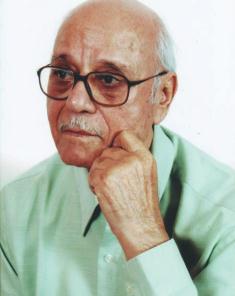
H.K. Razdan
CREDIT: HARMAN GROUP
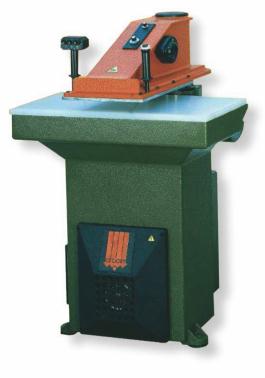
Atom clicking press of which Harman Group has sold a huge
number over the years.
CREDIT: ATOM SPA