WORLD FOOTWEAR
NOVEMBER/DECEMBER 2011
34
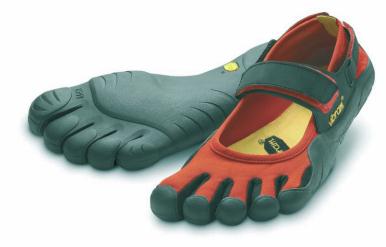
The Vibram FiveFingers has separate slots for each
toe and no cushioning.
CREDIT: VIBRAM
range, called simply ‘Barefoot’ was developed in partnership
with Vibram and comprises six models for both men and
women. Merrell has perhaps taken a leaf out of Vibram’s
marketing book in calling the footwear not shoes but ‘gloves’
– a description which befits the idea of the minimalist shoe
as something that should protect, but not inhibit, the feet of
the wearer.
Merrell says that the benefits of its minimalist footwear
include lower impact, a more efficient and aligned gait and
stimulated muscles increasing core strength, improving
ability and building “the body’s ability to burn more
calories”. Although there has not been much study on
barefoot training, research has shown that wearing shoes to
exercise takes more energy, and that barefoot runners use
about 4% less oxygen than shod runners. Other studies
suggest barefoot athletes naturally compensate for the lack
of cushioning and land more softly than runners in shoes,
putting less shock and strain on the rest of the body. Barefoot
runners also tend to land in the middle of their foot, which
can improve running form and reduce energy use.
Michael Warburton’s review of barefoot running in
Sports
Science
stated: “Running barefoot is associated with a
substantially lower prevalence of acute injuries of the ankle
and chronic injuries of the lower leg in developing countries,
but well-designed studies of the effects of barefoot and shod
running on injury are lacking. Laboratory studies show that
the energy cost of running is reduced by about 4% when the
feet are not shod, due to the lack of extra mass on the foot.
In spite of these apparent benefits, barefoot running is rare
in competition, and there are no published controlled trials
of the effects of running barefoot on simulated or real
competitive performance.”
1
Embracing barefoot
At a time when barefoot running is becoming
increasingly popular, it is interesting that
Merrell has decided to embrace the idea, rather
than avoid it altogether for fear of reduced sales.
After all, the very concept of barefoot running negates the
need for athletes to ever buy running shoes again. It is a bold
and clever move to not only support the barefoot movement,
but to create a product which will ensure continuing sales,
as people who like the idea of it look for a halfway point
before discarding their shoes altogether. Barefoot running
expert Jason Robillard collaborated with Merrell at OutDoor
in July to explain the ideas behind barefoot running and
promote the shoes. However, in his book, The Barefoot
Running Book, Mr Robillard says that using barefoot shoes to
get used to barefoot running is not the way to do it. “It is
common for new barefoot runners to have a desire to ‘ease
into’ barefoot running by using a minimalist shoe,” he writes.
“I have found it is better to learn the proper form of barefoot
running first, and then use minimalist shoes as needed.”
This sentence will surely not lead to a rush in sales of
minimalist shoes – but as the likelihood is that barefoot
running will increase in popularity over time rather than
decrease, it is probably for the best that sports brands are
backing the movement rather than running away from it.
1. Michael Warburton, ‘Barefoot Running’. Sports Science, (December 2001).
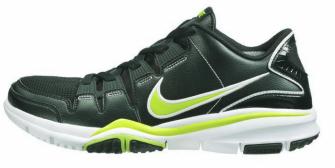
The Nike Free line of footwear features a segmented sole
which Nike says provides greater flexibility while still having an
amount of cushioning.
CREDIT: NIKE