WORLD FOOTWEAR
NOVEMBER/DECEMBER 2011
Petrecca, said. “But the minimal side of it is also very
consumer-driven. So you’re kind of seeing it from both
sides. The consumer is reacting and has been over the last
two years toward better-engineered, lightweight product
from lots of people. It’s opening up the spectrum as to
what’s acceptable in terms of performance footwear in the
running category.”
Last year it was estimated that Nike had a 75% share in
lightweight running, mainly due to its Nike Free shoes.
Since the first model debuted in 2005, Nike has led the
lightweight running category while refining its offerings.
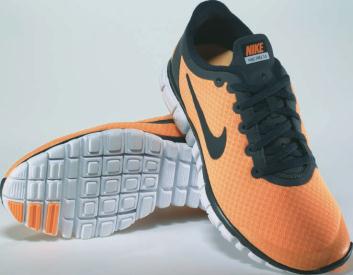
The laces on the Nike Free are positioned asymmetrically,
which relieves pressure on the top of the wearer’s foot, and
the grooves in the sole are deeper and wider, which forces
the wearer to use their toes for stability. The latest in the
Free line is the Nike Free Run +3, which weighs the same
as its predecessor at 246.6 grams, but offers more support.
The shoe retains Phylite midsole cushioning but modifies
the sole flex groove pattern to better support the arch. It also
improves durability, with a stronger toe box and reinforced
hard rubber wear points on the heel and toe. The shoe’s
upper features a mesh construction that weighs less and
offers ventilation to keep the foot cool.
Lightweight basketball shoes
The presence of lightweight shoes is growing in a number
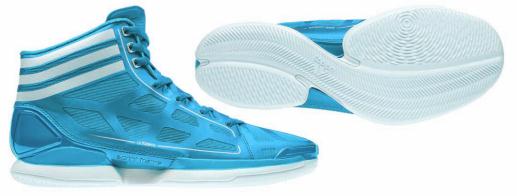
of sports besides running – the adiZero Feather from adidas
is a lightweight tennis training shoe, and in April this year the
German brand launched what it claimed was the “lightest
shoe in basketball”. The adiZero Crazy Light weighs 227.8
grams and is, according to adidas, more than 15%
lighter than its nearest competitor.
Lawrence Norman, adidas vice
president of Global Basketball,
said: “No other basketball shoe
compares to the new adiZero
Crazy Light and it’s a shoe that
will revolutionise the game. The
ultra lightweight design is built for
players who want to be faster, jump higher
and perform better on the court.”
The adidas Innovation Team (aIT) and adidas Basketball
Design developed the adiZero Crazy Light over a period of
two years from the canvas of a bare foot. “We wanted to
build the ultimate shoe for the ultimate basketball player,
and research has clearly shown that a lighter shoe will
provide better performance,” said Griff Wilson, senior
developer at the aIT. “The key is to provide the support and
cushioning of a traditional basketball shoe in a super
lightweight construction.”
The adiZero Crazy Light features a ‘Sprintweb exoskeleton’
upper less than 1mm thick and seamlessly bonded to a nylon
textile base to significantly reduce weight and provide
increased support and strength. The web layout of the
materials provides vertical and horizontal strength to give
players optimum support for any cutting motion.
The ‘Sprintframe’ external heel counter and ‘Torsion
System’ are bonded together to allow maximum weight
reduction, energy return and motion control, according to
adidas. Each lace eyelet is load bearing and has a
corresponding web spar to support players during hard cuts.
The upper is made with translucent nylon to further
decrease weight.
38
The adiZero Crazy Light, which adidas claim is
the “lightest shoe in basketball”.
CREDIT: ADIDAS
Nike’s lightweight Free 3.0
running shoe.
CREDIT: NIKE