WORLD FOOTWEAR
SEPTEMBER/OCTOBER 2011
24
While Dri-Lex fabrics are engineered to provide
various performance features depending on
application they are all designed to manage
moisture within a shoe environment to keep the
surface of the foot dry and comfortable. To
achieve this, they combine fibre content, yarn
features and fabric construction with
hydrophilic (water loving) components.
The actual movement of water (hydrophilic
action) works through a combination of
absorption, adsorption, wicking and rapid
drying capabilities resulting from the inherent
nature of the fibres involved. These properties
are permanently built into the yarns and micro-
environments created in the structure and will
not wash or wear away in use.
To achieve the best levels of performance
possible, Faytex has strategic alliances with top
fibre and fabric innovators which enable it to
incorporate a wide range of valuable
technologies. These include:
Aegis
Microbe Shield for resistance to a broad
range of bacteria, fungi and algae
Cambrelle
non-woven fabric for overall
toughness and resistance to abrasion
Cordura
highly durable fabrics in a variety of
weights, constructions and textures
Repreve
nylon and polyester yarns with
certified recycled content.
…as a matter of fact…
‘ ’
brands have placed orders, some for production and others
to start a development process with the first shoes appearing
at retail this past spring and summer.
“What we discovered at some forward-thinking smaller
brands were people who wanted to make a difference and an
environmental statement with their footwear. Visionaries
such as Udi Shiloah at Palladium and Asher Clark at Terra
Plana saw that these new fabrics made sense on a number of
levels. First, they realised they weren’t sacrificing anything
since these Dri-Lex constructions performed as well as or
better than most other polyester- or nylon-based fabrics in
abrasion resistance and durability tests. The hand feel also
gave them a product advantage at retail as soon as the
customer picked up the shoe and felt the lining. Finally, they
had the ability to use Sorona’s sustainability feature to tell a
‘green’ story if they so chose.”
In fact, after the initial round of sales meetings, Ms Stangl
soon came to realise that the value of this new fibre in the
company’s various constructions was not just that it was
environmentally friendly, but that it had the potential to
perform to a high standard in everything from athletic
footwear to fashionable urban chukka boots.
EXCLUSIVITY
Ms Stangl is quick to credit DuPont with some of Faytex’s
early success as this was an untested product in the footwear
category. With lengthy lead times in the development and
production cycles, she was concerned that DuPont would not
have the patience to stay the course until firm orders
materialised. Although those received have been small thus
far, the encouraging sign is that Sorona-based fabrics have
been specified for spring and autumn 2012 salesmen’s
samples. “When the brands tell this story to the retail
community and they in turn tell it to their customers, we
believe that sell through will be strong, especially to eco-
conscious consumers.”
She goes on to say that, “Because of DuPont’s willingness
to grant us exclusivity for one year, we have been able to
approach potential customers in a measured and
systematic way and then create fabrics that
responded to conversations with them. We are
in the business of helping our customers sell
shoes and think these Sorona-based products
provide extra value and will do exactly that.”
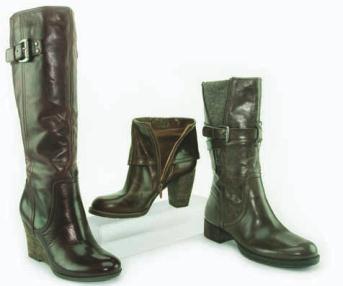
All the models in Naya’s latest boot
range feature Sorona-based linings.
CREDIT: NAYA