Basic HTML Version


MANUFACTURING & MATERIALS INNOVATION
32
WORLD FOOTWEAR | MARCH/APRIL 2012
O
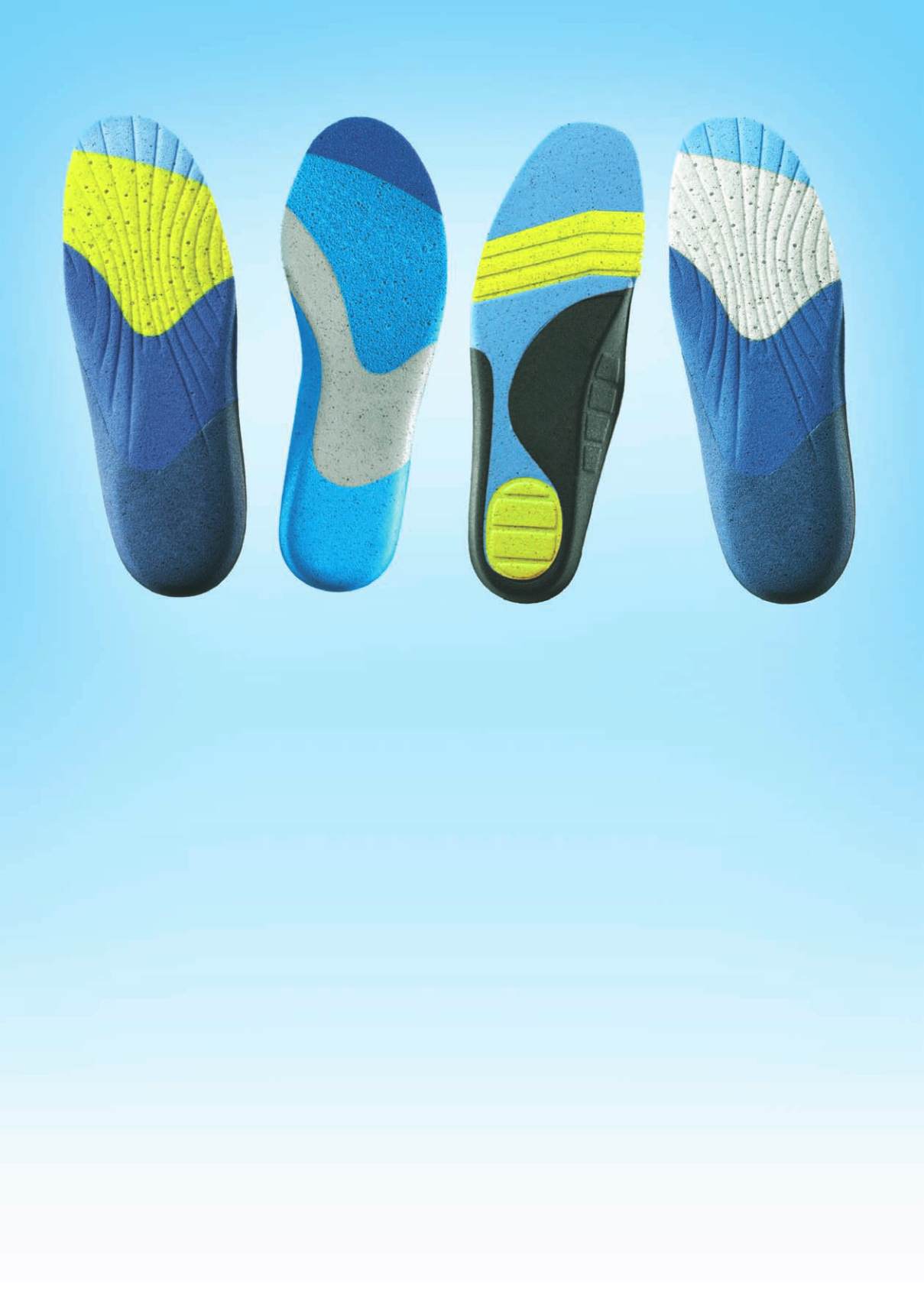
rthoLite, with headquarters in
the U.S.A., is a major volume
producer of moulded foam
inserts for footwear. Its
particular forte is its ability to quickly
create products individually tailored to
its customers’ requirements and then
deliver them efficiently to their
factories from its manufacturing
facilities in Asia and the Far East. That
it has been immensely successful is
borne out by the fact that its inserts are
used by many leading brands including
Nike, Asics, New Balance, Merrell,
Puma, Vans and Timberland. In
addition, it has extensive sales direct to
consumers via the internet.
In common with many other insert
producers, it also exploits the physical
advantages of open cell urethane foam
to offer maximum comfort and shock
absorbency, plus excellent moisture
absorption and desorption properties
to reduce friction. The company also
claims that, based on independent
testing, the structure of the foams it
uses for its inserts offers 95-100%
breathability, allowing air to circulate
in and around them to keep the foot
cooler and drier inside the shoe and
reducing the opportunity for the
microbes associated with foot odour to
accumulate. There are in fact seven
different formulations available to
manufacturers.
Lazy OrthoLite
is a slow recovery
foam formulated to create ‘instant
gratification’ when the shoe is first tried
on. It conforms to the foot when
pressure is applied and rebounds to its
original shape when released.
.13 Density
is the standard OrthoLite
formulation available in hardnesses
from 5-45 degrees Asker C and
thicknesses from 2-20 mm. Due to the
cell structure, its very low compression
set prevents the material from breaking
down and ensures optimum comfort
long term.
.11 Density OrthoLite
was created to
provide a more economical foam option.
With the same base properties as .13
Density, it has all the standard OrthoLite
features with only slightly reduced
compression set and tear properties but
at lower cost.
Eco OrthoLite
foam uses a non-food
source bio oil as a substitute for the
20% of petroleum content normally
found in the polyol portion of urethane
PHOTO CREDIT: ORTHOLITE
Comfort from the
inside out