Basic HTML Version


L
ast year, one of the most debated themes in the
footwear industry was natural or barefoot running. The
pros and cons of training either completely barefoot,
or with trainers designed specifically to mimic barefoot
movement, were widely talked about, with the two camps of
thought becoming increasingly polarised. Those in favour of
barefoot running say that it helps prevent injuries and is good
for posture; those on the other side of the fence say that
shoes have been designed as a tool to enhance our everyday
performance in any number of activities, and therefore to not
wear shoes is somehow backward and more of a hindrance
than a help. Part of the problem of the barefoot debate is that
there is no reliable data or study to prove the effects either
way. There’s no doubt that studies in the future will shed
some light on the issue but, for now, the best information
available is largely opinion-based and anecdotal.
At the recent British Association of Sport and Exercise
Medicine (UKSEM) conference in London, a session titled
“Natural Running – advantages and disadvantages. A Round
Table Discussion” featured a high-profile array of biologists,
biomechanists and clinicians who put forward their opinions
f or and against running without shoes. The panel
comprised: Daniel Howell, an anatomy professor from
Liberty (USA), known as the “barefoot professor”; Simon
Barthold, who formerly worked as a podiatrist but who now
works in biomechanics and is a global research consultant
for sports brand A
SICS
; Benno Nigg, a professor of
biomechanics at the University of Calgary; Dr Mathias
Marquard, a clinician and running coach and Daniel
Lieberman, evolutionary biologist at Harvard University who
recently published the nature studies looking at how
habitually shod and barefoot runners differ, and who wrote
a key paper on how humans are adapted (skeletally and
physiologically) to run long distances.
At opposite ends of the spectrum were Mr Howell, who
explained that he had been living barefoot for six years,
spending 9 5% of his time without shoes, and Mr Barthold,
who said that although he believes it is a personal choice,
the protection and performance benefits of wearing
footwear outweigh any potential benefits of barefoot
running - an unsurprising stance given that his career is
within the footwear industry. Mr Nigg, Mr Marquard and Mr
Lieberman were more neutral. Mr Nigg said that he asks his
students this question in exams: “Does barefoot running
prevent injuries?”, and the only answer he accepts for a
good grade is: “I don’t know because we don’t know.” As a
clinician, Mr Marquard treats many people who have
sustained an injury while running barefoot on a man-made
surface such as concrete — but he thinks barefoot running
on natural surfaces such as grass can help strengthen the
The natural way?
As the barefoot running trend grows ever more popular, experts argue the pros and
cons of cushioning, muscle tuning and whether ‘natural’ really is better.
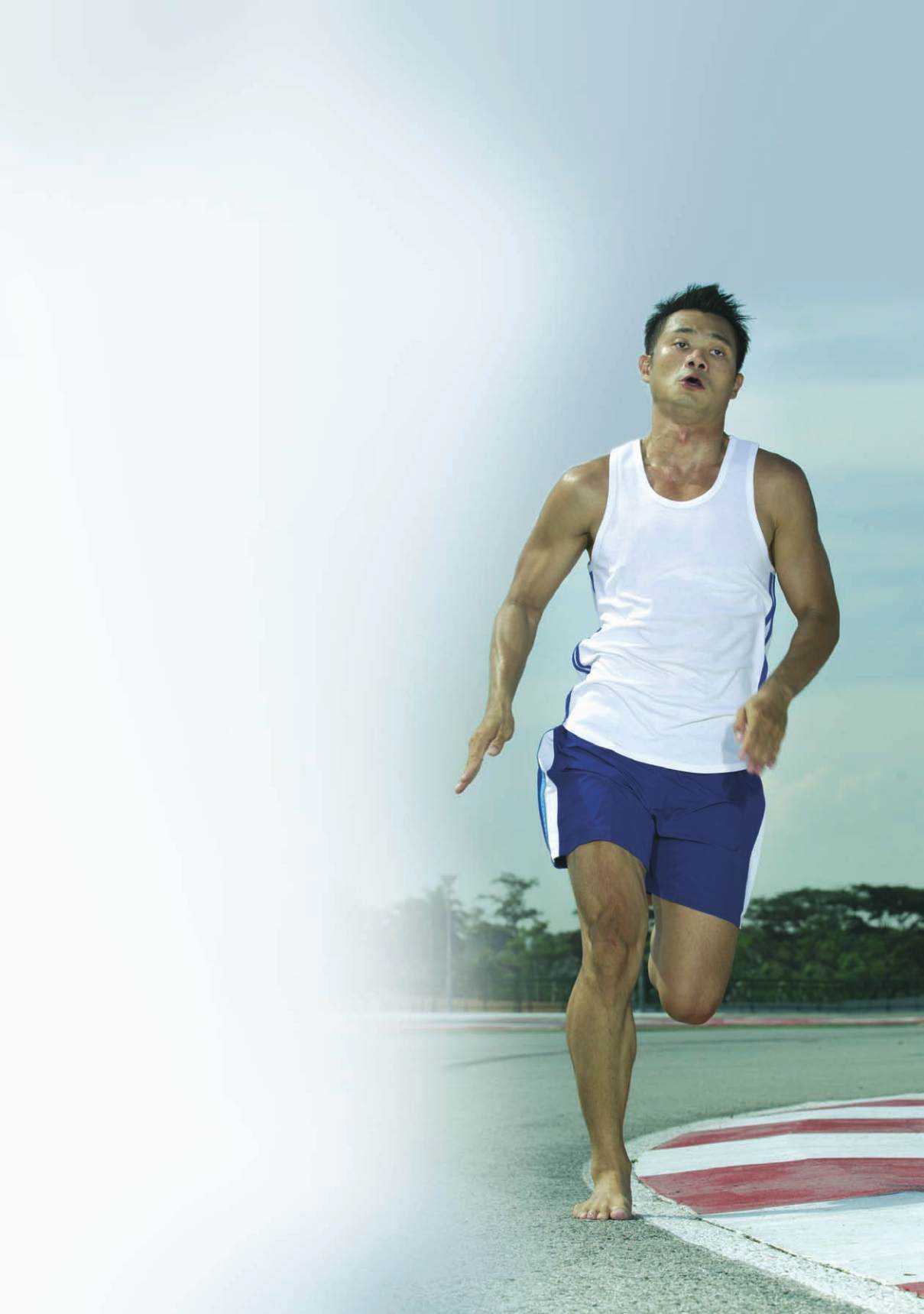
In just a few years, barefoot
running has gone from an
alternative trend to a
mainstream talking point.
PHOTO CREDIT: SHUTTERSTOCK
37
FASHION & CONSUMER DEMAND
MARCH/APRIL 2012 | www.footwearbiz.com